Features

Designed for partner-driven data distribution.

Hashrights helps you prevent duplicate sales, keep customer lists private, and run clean workflows across collections, partners, and decisions.

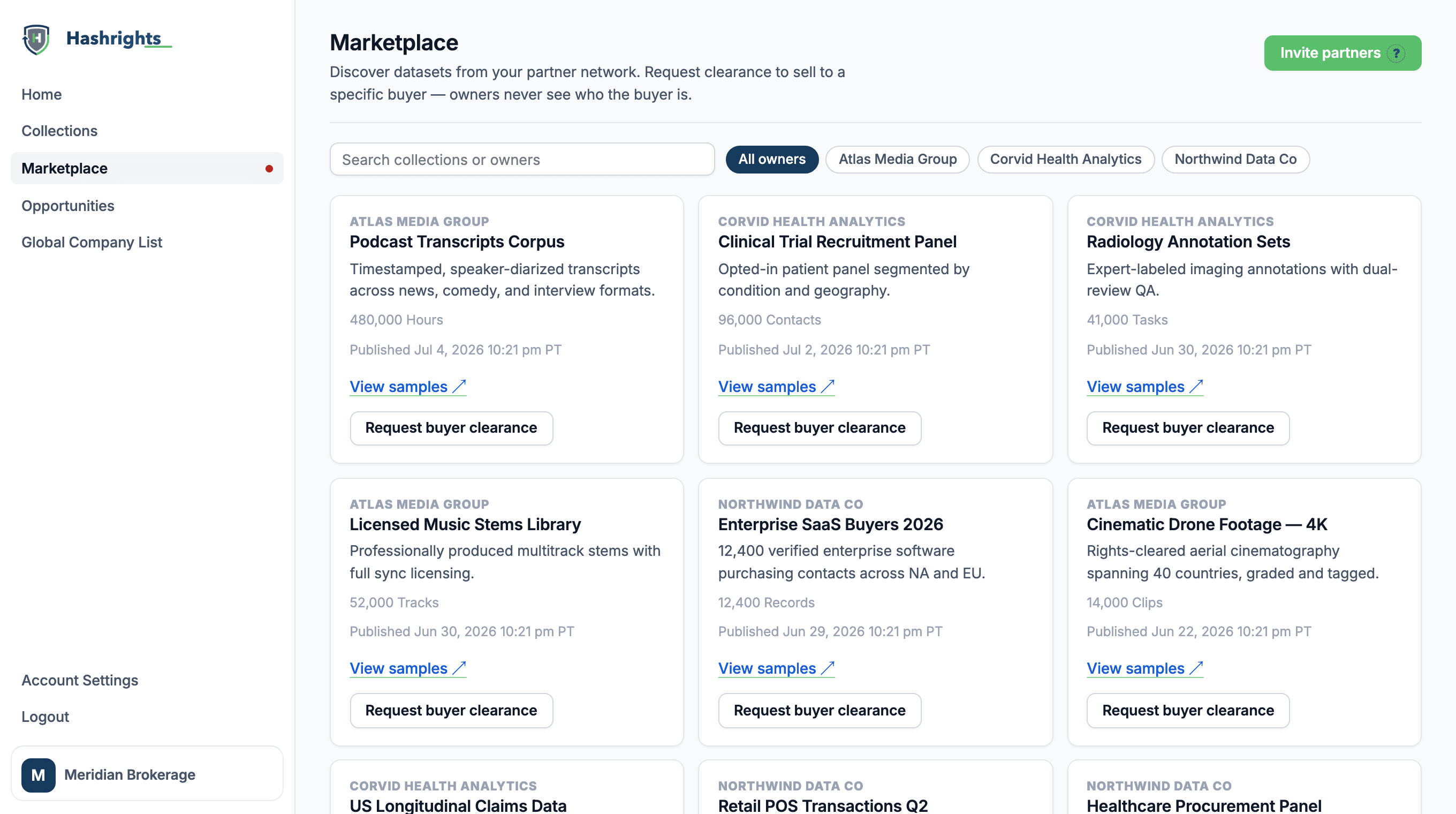
Collections as the rights boundary

Model an asset (or set of assets) once, then manage who can query it and what is already spoken for.

Partner invites with query limits

Grant partners controlled access with expiry windows and per-invite query quotas.

Privacy-safe matching

Hashing allows deterministic matching without exposing raw customer lists to counterparties.

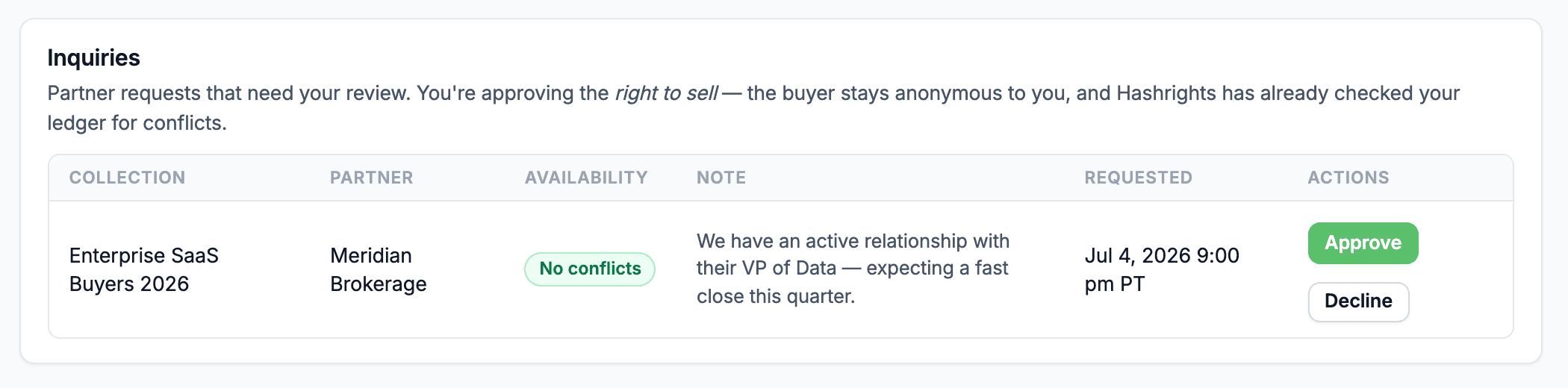
Decision queue

Unmatched checks route to you. Approve or decline intent to proceed, with a clear audit trail.

Global company registry

Standardize customer domains once and reuse them across collections and workflows.

Built for teams

Owners and admins manage account settings, and roles keep operational access clean.

What Is a Collection?

A Collection represents a data asset or group of assets that your company owns and wishes to market through partners. These may include off-the-shelf datasets, datapacks, or proprietary resources. Each collection is uniquely defined by your team, and you may optionally share supporting materials like data sheets or samples with your partners to help evaluate fit.

Once a collection is created in Hashrights, you can securely invite partners to check whether their prospective customers have already seen the collection without ever exposing your full customer list.

Hashrights performs a privacy-preserving match between your existing customer registry and your partner's target account. If there's a collision, your partner is discreetly declined access to market that collection. If no match is found, you retain full control to approve or deny the partner's request.

When you approve a partner's request, that customer is added securely and anonymously to the collection's registry. This ensures future partner requests will never conflict, even as your network of collaborators grows. You never see your partner's target customer, but can be confident in avoiding accidental overlap.